Accurate medical coding plays a vital role in both patient documentation and timely reimbursements. For specialties like dermatology, podiatry, and urgent care, using the correct ICD-10 codes for nail conditions such as onychomycosis is essential.
Even though it is a common condition, incorrect coding or incomplete documentation can easily lead to claim denials, delays, or compliance issues. Whether billing is handled in-house or by an RCM partner, getting the coding right is critical for a smooth revenue cycle.
What Is Onychomycosis?
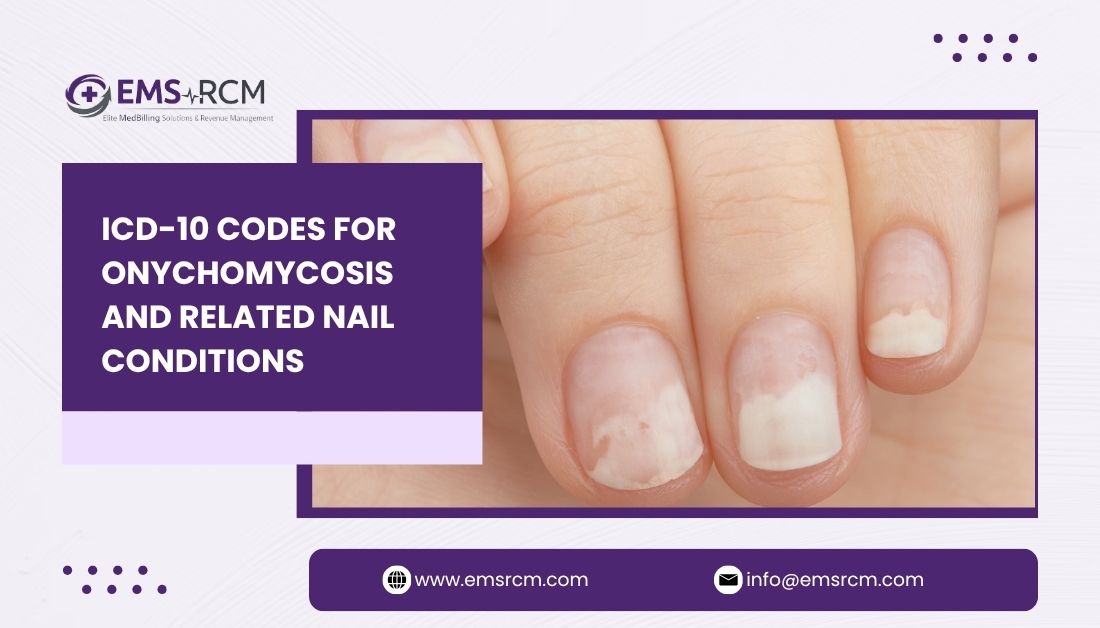
Onychomycosis, also known as tinea unguium, is a fungal infection that affects the nail bed or nail plate. It usually develops gradually, starting as a small discoloration and progressing into thick, brittle, and damaged nails.
Common Symptoms
- Thickened nails
- Yellow, white, or brown discoloration
- Brittle or crumbly texture
- Separation of the nail from the nail bed
Risk Factors
- Diabetes and chronic health conditions
- Older age
- Weakened immune system
- Poor circulation
- Frequent exposure to moisture, especially in athletes
ICD-10 Code for Onychomycosis
The correct ICD-10 code for onychomycosis is:
B35.1 – Tinea unguium (Onychomycosis)
This code should only be used when a fungal infection is confirmed, either clinically or through lab testing such as fungal cultures. Proper use of this code ensures accurate billing for treatments like antifungal therapy or nail debridement.
Related ICD-10 Codes for Nail Conditions
Nail disorders can sometimes look similar, so correct diagnosis and coding are important.
Other Fungal Conditions
- B35.0 – Tinea capitis and tinea barbae
- B35.3 – Tinea pedis (often seen alongside nail fungus)
Non-Fungal Nail Disorders
- L60.0 – Ingrown nail
- L60.2 – Nail separation (onycholysis)
- L60.3 – Nail dystrophy
- L60.4 – Beau’s lines
- L60.5 – Yellow nail syndrome
Using the wrong code for a similar condition can result in claim rejections or audits, so accurate differentiation is key.
Best Practices for Coding
To avoid errors and improve claim acceptance, follow these simple guidelines:
- Be Specific in Documentation
Clearly mention whether the infection is clinically diagnosed or lab-confirmed. - Use Additional Codes When Needed
Include related conditions or comorbidities, especially in patients with diabetes or other chronic issues. - Pair with CPT Codes
Procedures like nail debridement should always be billed with the correct CPT codes alongside the diagnosis. - Ensure Complete Records
Detailed notes support medical necessity and help during audits.
Special Considerations for Certain Patients
Some patient groups require extra attention when coding:
- Elderly Patients
May have multiple nail conditions that need separate documentation - Diabetic Patients
Often require additional codes to reflect complications - Immunocompromised Patients
Need strong documentation to justify treatment plans
Accurate coding in these cases ensures proper reimbursement and reduces the risk of denials.
Common Coding Mistakes to Avoid
Even small mistakes can create big billing issues. Watch out for:
- Using B35.1 without confirming a fungal infection
- Choosing unspecified codes when a specific one is available
- Missing related diagnoses like diabetes or psoriasis
- Confusing fungal infections with bacterial or inflammatory conditions
A quick review before claim submission can prevent these errors.
Why Accurate Coding Matters
Correct ICD-10 coding is not just about compliance. It directly impacts your revenue.
- Supports proper reimbursement for procedures like nail debridement
- Reduces claim rejections and rework
- Improves overall billing efficiency
- Ensures smoother audits and payer reviews
When diagnosis codes are accurate and well-documented, the entire revenue cycle becomes more predictable.
FAQs
What is the ICD-10 code for fungal nail infection?
B35.1 is the correct ICD-10 code for onychomycosis.
Can it be coded with diabetes?
Yes, additional codes should be used to reflect the diabetic condition when applicable.
Is lab confirmation required?
Not always, but it strengthens documentation and supports medical necessity.
How is it different from nail psoriasis?
Onychomycosis is coded under B35.1, while nail psoriasis falls under L40 codes depending on the case.
Final Thoughts
Onychomycosis may seem like a minor condition, but incorrect coding can lead to major financial and compliance challenges. As billing requirements continue to evolve, staying accurate with ICD-10 coding is more important than ever.
Whether you manage billing internally or work with a professional partner, proper coding ensures better outcomes for both patient care and revenue performance.