
ICD-10 Code E11: Type 2 Diabetes Mellitus
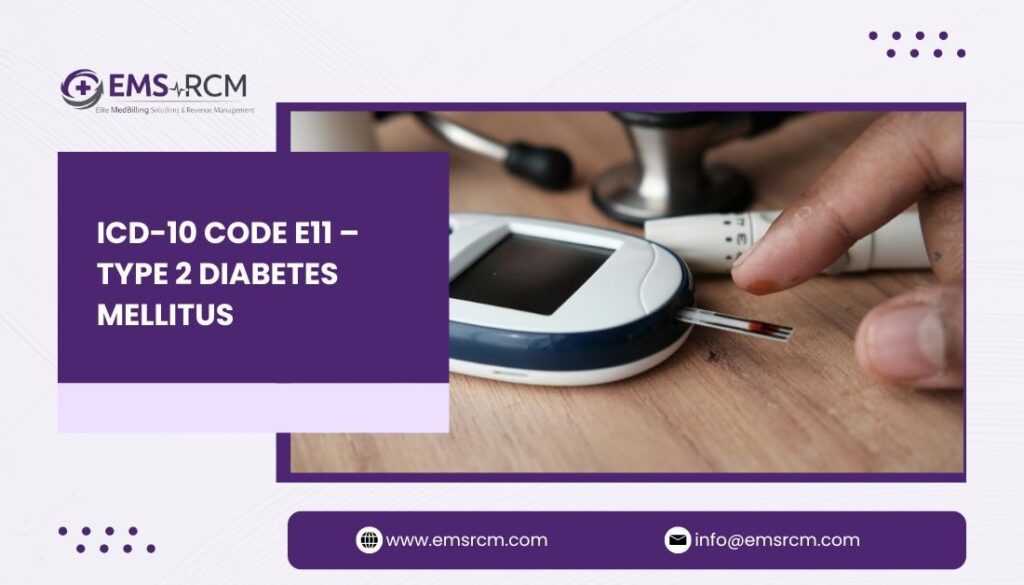
ICD-10 Code E11 refers to Type 2 Diabetes Mellitus, a chronic metabolic condition where the body either does not produce enough insulin or becomes resistant to insulin, leading to high blood sugar (glucose) levels. This code belongs to the ICD-10 system used globally for medical diagnosis, Medical billing, and healthcare documentation. Is ICD-10 Code E11 Billable? The code E11* is non-billable, meaning healthcare providers must use a more specific sub-code (e.g., E11.9, E11.65) for accurate medical billing and reimbursement. ICD-9 Code Transition Important Note on Code Confusion In some cases, healthcare providers may confuse ICD-10 Code I10 with E11, but it is important to note that each code is used for a distinct diagnosis. Understanding Type 2 Diabetes Mellitus Type 2 Diabetes is a long-term condition that affects how the body processes blood sugar. It develops when: Over time, uncontrolled diabetes can lead to serious complications affecting the heart, kidneys, eyes, and nerves. Common Symptoms of Type 2 Diabetes Patients diagnosed under ICD-10 Code E11 may experience: Common Billable Sub-Codes of E11 To ensure accurate coding and reimbursement, providers use specific subcategories such as: These sub-codes provide detailed clinical information and improve claim acceptance rates. Why Accurate Coding Matters Using the correct ICD-10 code: Incorrect or incomplete coding (like using E11* alone) can lead to billing errors and delays. Final Thoughts ICD-10 Code E11 plays a crucial role in diagnosing and documenting Type 2 Diabetes Mellitus, but it must always be paired with a specific billable sub-code for proper use in medical billing.Healthcare providers should stay updated with Medical coding guidelines to ensure compliance, accuracy, and optimal revenue cycle performance.
ICD-10 Code E66: Overweight and Obesity
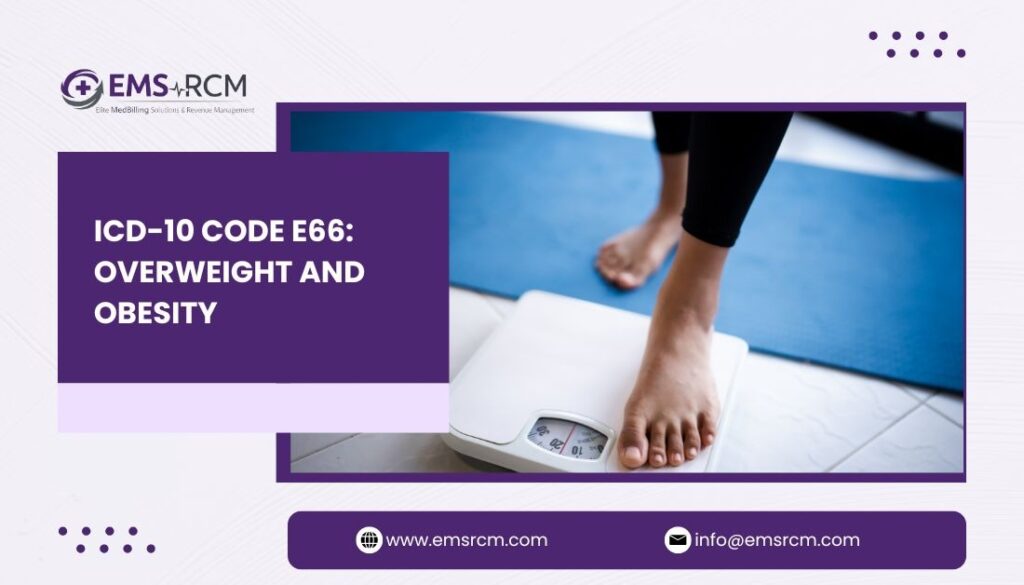
ICD-10 Code E66 is used in healthcare documentation for the diagnosis of Overweight and Obesity. This condition is characterized by an excessive accumulation of body fat that may negatively impact health. It is important to note that E66 is a non-billable ICD-10 code, meaning it is primarily used for classification and documentation purposes in medical records and reimbursement systems. Read More: Understanding ICD-10 Code J09.X2 What is ICD-10 Code E66? ICD-10 Code E66 refers to a group of diagnoses related to overweight and obesity conditions. These conditions can be influenced by fat, muscle, bone, or fluid retention. ICD-9 to ICD-10 Code Transition Before ICD-10, obesity and overweight conditions were classified under: This transition improved specificity in diagnosis and reporting. Medical Definition of Obesity Obesity is a chronic medical condition defined by an abnormally high and unhealthy amount of body fat. It is commonly measured using Body Mass Index (BMI). Excess weight may come from: Common Synonyms and Related Conditions ICD-10 Code E66 includes a wide range of related medical terms and classifications such as: Overweight Conditions Obesity (Adult) Childhood Obesity Pregnancy and Postpartum Obesity Obesity Counseling Read More: ICD 10 Code for Low Back Pain BMI-Based Classification Obesity and overweight are often categorized based on Body Mass Index (BMI): Overweight Obesity (Class I to III) Clinical Importance of ICD-10 E66 Proper Medical coding of overweight and obesity is important for: Conclusion ICD-10 Code E66 plays a key role in identifying and documenting overweight and obesity-related conditions. With detailed BMI-based classifications, it helps healthcare providers ensure accurate diagnosis, reporting, and treatment management.
Understanding ICD-10 Code J09.X2: Influenza Due to Novel Influenza A Virus
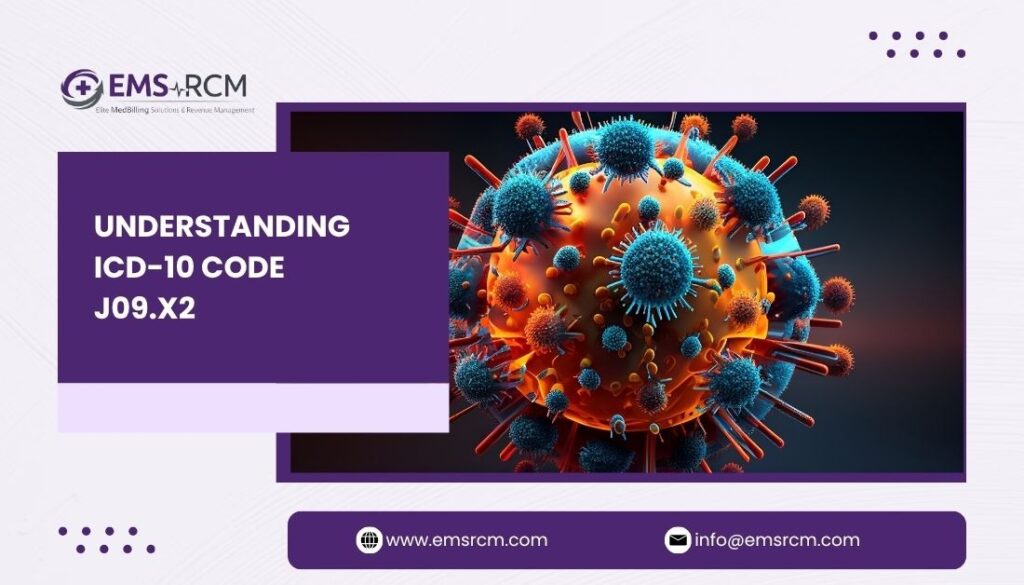
The ICD-10 coding system plays a crucial role in healthcare by standardizing diagnoses for accurate billing and record-keeping. One important code within this system is J09.X2, which refers to a specific and potentially serious type of influenza infection. What is ICD-10 Code J09.X2? ICD-10 Code J09.X2 is a billable diagnosis code used to identify influenza caused by a novel Influenza A virus with other respiratory manifestations. Because it is billable, healthcare providers can use this code for insurance claims and reimbursement purposes. This code falls under the broader category of diseases of the respiratory system.Clinical Overview of the Condition Influenza linked to this code is more than just a seasonal flu. It involves a novel strain of Influenza A virus, which can lead to widespread outbreaks or even epidemics. Common symptoms include: Due to its contagious nature, this condition can spread rapidly, especially in densely populated areas. Related Terms and Synonyms Healthcare professionals may encounter this condition under several different names, including: Understanding these synonyms helps ensure accurate diagnosis and coding. Potential Complications If not properly managed, this form of influenza can lead to more serious respiratory conditions. Some common complications include: These complications highlight the importance of early diagnosis and appropriate treatment. Conclusion ICD-10 Code J09.X2 represents a significant respiratory illness caused by a novel Influenza A virus. Its classification as a billable code ensures proper documentation and reimbursement, while its clinical implications emphasize the need for timely medical care. By understanding this code, healthcare providers can improve diagnostic accuracy, streamline billing processes, and ultimately deliver better patient outcomes.If you’re a healthcare provider in Tennessee looking to streamline your revenue cycle, EMS RCM is here to help. We specialize in accurate medical billing and coding services that reduce claim denials, improve reimbursements, and save your team valuable time.
ICD 10 Code for Low Back Pain: Complete Guide for Accurate Medical Coding
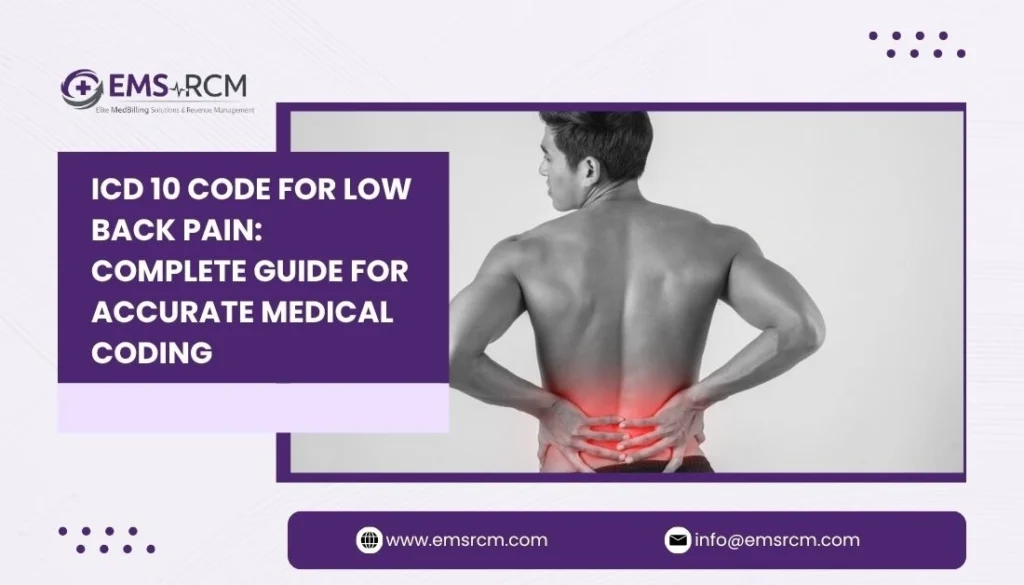
Low back pain is one of the most common reasons patients visit healthcare providers—and one of the most frequently coded diagnoses in medical billing. If you’re searching for the correct ICD-10 code for low back pain, you’re likely aiming to ensure accurate documentation, faster reimbursements, and fewer claim denials. This guide breaks down the correct ICD-10 codes, when to use them, and how to code low back pain properly based on clinical context. What Is the ICD-10 Code for Low Back Pain? The primary ICD-10 code for low back pain is: M54.50 – Low back pain, unspecified This code is used when: Related ICD-10 Codes for Low Back Pain Depending on the patient’s symptoms and diagnosis, more specific codes may be appropriate: ICD-10 Code Description M54.50 Low back pain, unspecified M54.51 Vertebrogenic low back pain M54.59 Other low back pain M54.40 Lumbago with sciatica, unspecified side M54.41 Lumbago with sciatica, right side M54.42 Lumbago with sciatica, left side Key Tip: Always choose the most specific code available based on provider documentation. Specificity improves claim acceptance rates. When to Use M54.50 vs. More Specific Codes Choosing the correct code depends on documentation clarity. Use M54.50 (unspecified) when: Use more specific codes when: Clinical Documentation Requirements Accurate coding starts with strong documentation. Providers should include: Example: “Patients present with chronic low back pain radiating to the right leg consistent with sciatica.” ✔ Correct Code: M54.41 Common Coding Mistakes to Avoid Even experienced coders make errors with low back pain coding. Here are the most common pitfalls: ICD-10 Coding Guidelines for Low Back Pain To stay compliant and optimize reimbursement: Why Accurate Coding Matters Proper ICD-10 coding for low back pain directly impacts: FAQs 1. What is the most commonly used ICD-10 code for low back pain? The most commonly used code is M54.50 (low back pain, unspecified), especially when no additional details are documented. 2. What is the ICD-10 code for low back pain with sciatica? Use: 3. Can I use M54.50 for chronic low back pain? Yes, but only if no further specificity is provided. If chronicity or cause is documented, a more specific code may be appropriate. 4. What is vertebrogenic low back pain in ICD-10? It is coded as M54.51 and refers to pain originating from vertebral endplates, a more specific diagnosis than general low back pain. 5. Is low back pain considered a symptom or diagnosis? It can be both. If no underlying condition is identified, it is coded as a symptom (M54.50). Summary The correct ICD-10 code for low back pain depends on clinical specificity and documentation quality: Accurate coding ensures better reimbursement, compliance, and patient care outcomes.