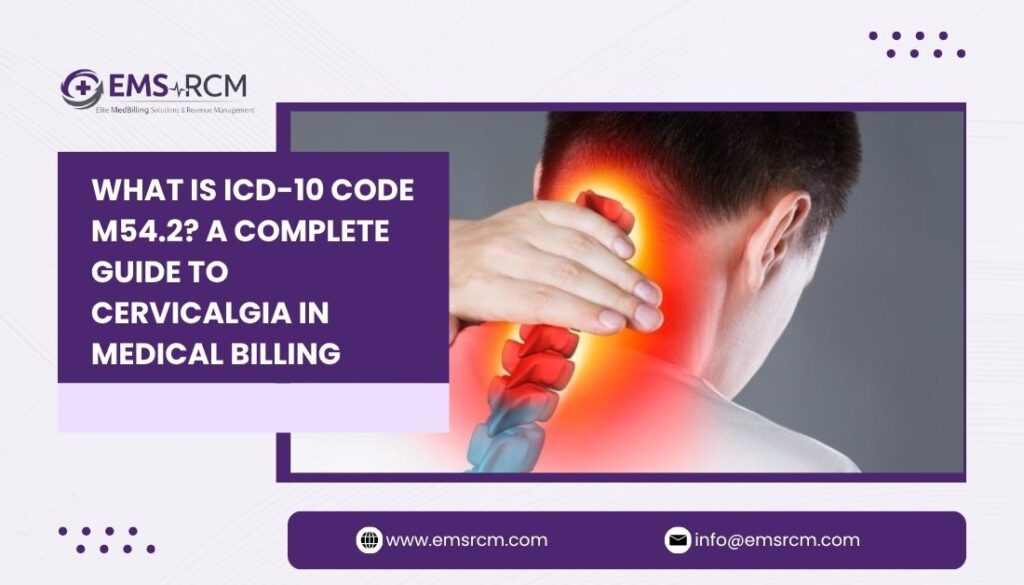
Neck pain is one of the leading reasons patients visit healthcare providers today. From long hours at a desk to injury or age-related wear and tear, discomfort in the cervical spine can significantly affect daily life.
In medical billing and clinical documentation, accurate diagnosis coding is essential to ensure proper treatment, clear records, and timely reimbursement. One of the most commonly used codes for neck pain is ICD-10 Code M54.2, also referred to as cervicalgia.
This guide explains what M54.2 means, when it should be used, common causes of neck pain, treatment approaches, and why precise coding is critical for healthcare providers.
What Is ICD-10 Code M54.2?
ICD-10 Code M54.2 is the official diagnosis code for cervicalgia, which simply means neck pain.
Healthcare providers use this code when a patient reports:
- Localized pain or stiffness in the neck
- Limited range of motion
- Muscle tightness or soreness in the cervical region
This code is typically used when the pain is non-specific and not linked to a more serious underlying condition such as fractures, infections, or neurological disorders.
When Should M54.2 Be Used?
M54.2 is appropriate in cases where:
- The diagnosis is general neck pain without a defined structural cause
- Symptoms are related to posture, strain, or mild degeneration
- No more specific ICD-10 code better describes the condition
If a more detailed diagnosis exists (e.g., cervical disc disorder), a different, more specific code should be used instead.
Common Causes of Cervicalgia (M54.2)
Neck pain can develop from a wide range of everyday and medical factors.
1. Muscle Strain and Overuse
- Repetitive movements
- Poor sleeping positions
- Heavy lifting
2. Poor Posture
- Long hours on computers or mobile devices
- Improper workstation ergonomics
- “Tech neck” from screen use
3. Injuries and Trauma
- Whiplash from car accidents
- Sports-related injuries
- Sudden jerking movements
4. Degenerative Conditions
- Cervical spondylosis (arthritis)
- Disc degeneration
- Herniated discs
How Neck Pain Is Diagnosed
A proper diagnosis ensures that M54.2 is used correctly and that serious conditions are ruled out.
Diagnostic Process Includes:
Patient History
- Nature of pain (sharp, dull, radiating)
- Duration and triggers
- Lifestyle or occupational factors
Physical Examination
- Range of motion testing
- Posture evaluation
- Neurological assessment
Imaging (if needed)
- X-rays
- MRI or CT scans
These steps help determine whether the pain is simple cervicalgia or something more complex.
Treatment Options for Neck Pain
Treatment varies depending on severity and underlying cause.
Conservative Treatments
- Rest and activity modification
- Ice or heat therapy
- NSAIDs (pain relievers)
- Physical therapy exercises
Advanced or Interventional Care
- Corticosteroid injections
- Chiropractic adjustments
- Manual therapy
Surgical Options (Rare Cases)
- Recommended only when conservative treatments fail
- Typically for nerve compression or structural issues
Most cases of cervicalgia improve with non-invasive treatments.
Why Accurate ICD-10 Coding Matters
Using the correct diagnosis code like M54.2 is essential for both clinical and financial outcomes.
Key Benefits of Accurate Coding:
1. Faster Insurance Reimbursement
- Reduces claim rejections and delays
- Ensures proper payment for services
2. Clear Medical Documentation
- Improves communication between providers
- Supports continuity of care
3. Better Treatment Planning
- Helps track patient progress
- Enables data-driven decisions
The Role of Medical Billing in Pain Management
Pain management practices often deal with complex and recurring conditions like neck pain. This makes accurate coding and billing even more critical.
How Medical Billing Services Help:
- Ensure correct use of ICD-10 codes like M54.2
- Reduce billing errors and denials
- Optimize revenue cycle performance
- Maintain compliance with payer guidelines
Efficient billing allows providers to focus more on patient care rather than administrative tasks.
Improving Patient Outcomes Through Accurate Coding
Precise coding and streamlined billing processes do more than improve revenue—they enhance patient care.
Benefits Include:
- Faster access to treatments
- Reduced delays due to claim issues
- Better coordination between providers
- Reliable medical records for long-term care
FAQs
1. What does ICD-10 Code M54.2 represent?
ICD-10 Code M54.2 refers to cervicalgia, which means general neck pain without a more specific diagnosis.
2. When should M54.2 be used?
It should be used when a patient has non-specific neck pain not linked to fractures, infections, or neurological disorders.
3. What are the common causes of cervicalgia?
Common causes include muscle strain, poor posture, injuries, and degenerative conditions like arthritis.
4. How is neck pain treated?
Treatment may involve physical therapy, medications, lifestyle changes, and in rare cases, surgery.
5. Why is accurate coding important in medical billing?
Accurate coding ensures proper documentation, reduces claim denials, and improves reimbursement efficiency.
Final Thoughts
ICD-10 Code M54.2 (cervicalgia) is widely used to document general neck pain in clinical and billing settings. While the condition is common, proper diagnosis, treatment, and coding are essential to ensure both patient well-being and practice efficiency.
By maintaining accurate records and using the correct codes, healthcare providers can improve outcomes, reduce administrative burdens, and streamline their revenue cycle.
Need Help with Pain Management Billing?
Managing coding accuracy and reimbursement for conditions like cervicalgia can be challenging.
At EMS RCM, we help healthcare providers:
- Improve coding accuracy
- Reduce claim denials
- Optimize revenue cycle performance
Connect with us today to simplify your medical billing and maximize reimbursements.