The ICD-10 coding system plays a crucial role in healthcare by standardizing diagnoses for accurate billing and record-keeping. One important code within this system is J09.X2, which refers to a specific and potentially serious type of influenza infection.
What is ICD-10 Code J09.X2?
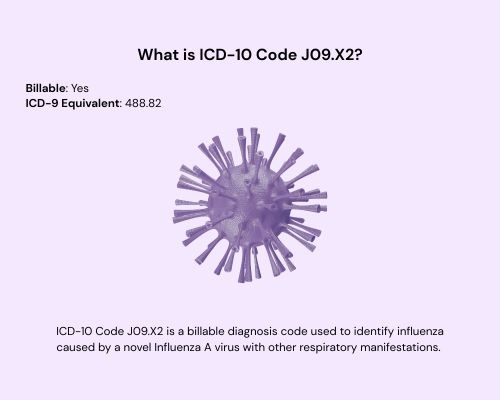
ICD-10 Code J09.X2 is a billable diagnosis code used to identify influenza caused by a novel Influenza A virus with other respiratory manifestations. Because it is billable, healthcare providers can use this code for insurance claims and reimbursement purposes.
- Billable: Yes
- ICD-9 Equivalent: 488.82
This code falls under the broader category of diseases of the respiratory system.
Clinical Overview of the Condition
Influenza linked to this code is more than just a seasonal flu. It involves a novel strain of Influenza A virus, which can lead to widespread outbreaks or even epidemics.
Common symptoms include:
- Fever
- Severe body aches
- Respiratory discomfort
- Catarrh (excess mucus in the nose or throat)
Due to its contagious nature, this condition can spread rapidly, especially in densely populated areas.
Related Terms and Synonyms
Healthcare professionals may encounter this condition under several different names, including:
- Avian influenza
- Influenza A
- Influenza A with upper respiratory symptoms
- Influenza due to Influenza A virus
- Avian influenza with upper respiratory symptoms
- Upper respiratory symptoms due to avian influenza
Understanding these synonyms helps ensure accurate diagnosis and coding.
Potential Complications
If not properly managed, this form of influenza can lead to more serious respiratory conditions. Some common complications include:
- Acute bronchitis
- Worsening of chronic conditions like COPD (Chronic Obstructive Pulmonary Disease)
These complications highlight the importance of early diagnosis and appropriate treatment.
Conclusion
ICD-10 Code J09.X2 represents a significant respiratory illness caused by a novel Influenza A virus. Its classification as a billable code ensures proper documentation and reimbursement, while its clinical implications emphasize the need for timely medical care.
By understanding this code, healthcare providers can improve diagnostic accuracy, streamline billing processes, and ultimately deliver better patient outcomes.If you’re a healthcare provider in Tennessee looking to streamline your revenue cycle, EMS RCM is here to help. We specialize in accurate medical billing and coding services that reduce claim denials, improve reimbursements, and save your team valuable time.